Beyond Drag-and-Drop: How AI is Revolutionizing Low-Code/No-Code Development
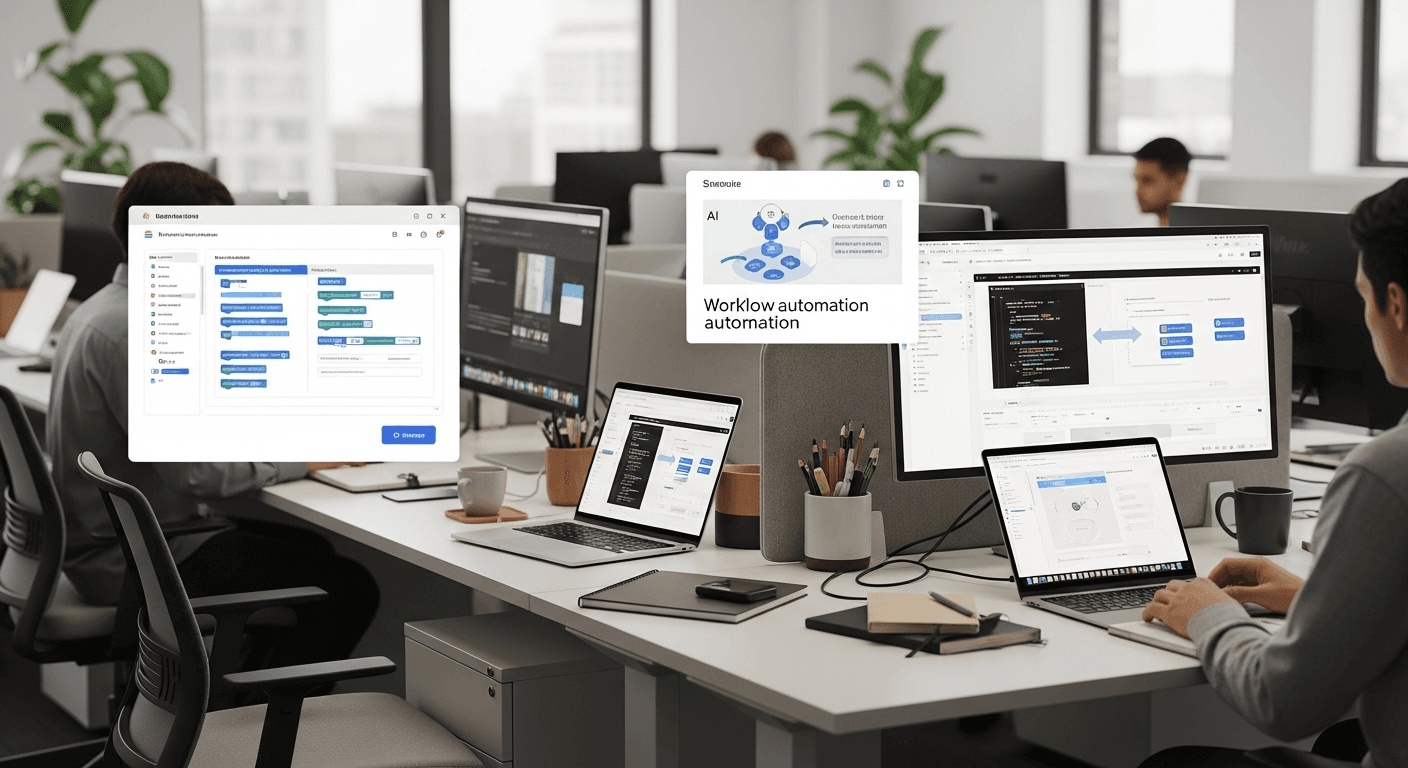
Low-code and no-code platforms promised to democratize software development, but their true potential is now being unlocked by artificial intelligence. This post explores how AI integration is transforming these platforms, from intelligent code generation and predictive analytics to automated testing, accelerating app development and empowering a new wave of 'citizen developers' while enhancing the productivity of seasoned engineers. Discover the benefits, challenges, and practical strategies for leveraging AI-powered LCNC for your next digital product.
The promise of low-code and no-code (LCNC) platforms has always been compelling: empower business users and accelerate software development without extensive coding knowledge. For years, these platforms delivered on a part of that promise, simplifying many aspects of application creation through visual interfaces, pre-built components, and drag-and-drop functionality. Yet, for all their utility, traditional LCNC tools often hit a wall when it came to complex logic, deep customization, or integrating with highly bespoke systems. Enter Artificial Intelligence.
Today, AI is not just augmenting LCNC; it's fundamentally transforming it, pushing the boundaries of what's possible and bridging the gap between business needs and technical capabilities. For companies like Devello, which builds mobile apps, web apps, and AI-powered solutions, this evolution represents a significant shift in how digital products are conceived, built, and delivered.
The AI Infusion: A New Era for LCNC
The integration of AI into low-code and no-code platforms is creating a new paradigm of 'intelligent' development, moving beyond simple automation to genuine assistance and even creation.
1. Intelligent Assistants & Code Generation: Imagine describing a feature you need, and the platform suggests the components, data models, and even generates snippets of underlying code to achieve it. AI-powered assistants can analyze natural language inputs, understand context, and recommend optimal solutions. This isn't just about generating basic CRUD operations; it extends to suggesting complex API integrations, optimizing database queries, or even crafting custom business logic based on intent. For developers, this means offloading repetitive, boilerplate coding, allowing them to focus on the truly innovative and challenging aspects of their work.
2. Predictive Analytics & Optimization: AI algorithms can analyze application usage patterns, identify potential bottlenecks, and suggest performance improvements before they become critical issues. This includes optimizing database schemas, recommending more efficient workflow automations, or even flagging security vulnerabilities in AI-generated code. This proactive approach ensures that applications built with LCNC tools are not just fast to develop, but also robust, scalable, and secure.
3. Natural Language to Application (NL2App): While still an emerging frontier, the vision of describing an entire application in plain English and having AI construct a functional prototype is becoming a reality. Tools are already available that can interpret complex user stories and translate them into initial application structures, UI layouts, and basic functionalities. This capability drastically reduces the initial development time, moving from ideation to a tangible product in record time, truly democratizing app development.
4. Automated Testing & Deployment: AI is also streamlining the often tedious processes of quality assurance and deployment. AI can generate comprehensive test cases based on application logic and user interfaces, identify edge cases that human testers might miss, and even autonomously fix minor bugs. Furthermore, AI can optimize deployment pipelines within LCNC environments, ensuring seamless integration and continuous delivery of updates.
Benefits for Businesses and Developers
This AI-driven evolution of LCNC offers compelling advantages for various stakeholders:
* Accelerated Time-to-Market: Rapid prototyping and deployment cycles mean businesses can respond faster to market demands, test ideas quickly, and gain a competitive edge. This is crucial for iterating on digital products swiftly. * Democratization of Development: Empowering 'citizen developers' – business analysts, product managers, and domain experts – to build functional applications significantly reduces the reliance on a limited pool of highly specialized coders for every task. This expands the talent pool and fosters innovation across the organization. * Enhanced Developer Productivity: Professional developers are freed from repetitive coding tasks, allowing them to focus on architecting complex systems, solving unique challenges, and building cutting-edge AI-powered solutions. LCNC becomes a powerful tool in their arsenal, not a replacement. * Improved Quality and Maintainability: AI's ability to identify potential issues, optimize code, and automate testing leads to more robust, performant, and maintainable applications, reducing technical debt in the long run.
Challenges and Considerations
While the promise is vast, it's essential to approach AI-powered LCNC with a clear understanding of its limitations and challenges:
* Vendor Lock-in: Many LCNC platforms are proprietary, and deep integration with their AI tools can lead to vendor dependence. Careful evaluation of export options and platform flexibility is crucial. * Scalability & Customization Limits: For truly enterprise-scale applications requiring highly specialized performance or complex integrations, traditional coding may still be necessary. AI-powered LCNC excels at accelerating the foundational layers, but knowing when to transition to bespoke code is key. * Security & Governance: Ensuring that AI-generated code adheres to security best practices and organizational governance policies requires robust review processes and clear guidelines. The 'black box' nature of some AI models can pose challenges. * Ethical AI Use: As AI takes on more creative and decision-making roles in development, questions of bias in models, accountability for errors, and data privacy become paramount.
Practical Insights for Leveraging AI-Powered LCNC
For businesses looking to harness this powerful trend, here are some actionable strategies:
1. Identify Strategic Use Cases: Start with well-defined projects that benefit from rapid development and can leverage pre-built components. Internal tools, specific mobile apps, customer portals, or process automation are excellent starting points.
2. Integrate, Don't Replace: Position AI-powered LCNC as an augmentation tool for your existing development teams. It's about empowering your engineers and citizen developers, not replacing them. Foster collaboration between technical and non-technical teams.
3. Focus on Governance and Best Practices: Establish clear guidelines for using LCNC platforms, including security protocols, data handling, integration standards, and code review processes. Treat AI-generated components with the same rigor as manually written code.
4. Invest in Continuous Learning: The LCNC and AI landscapes are evolving rapidly. Stay updated on platform advancements, new AI capabilities, and best practices to maximize your investment and ensure your team is always leveraging the latest tools effectively.
The Future is Hybrid
The future of software development, particularly for mobile apps and web apps, is increasingly hybrid. AI-powered low-code/no-code platforms will handle the rapid construction of foundational elements and routine tasks, allowing skilled developers to dedicate their expertise to crafting the unique, high-value, and complex aspects of digital products. This synergy promises unprecedented speed, innovation, and accessibility in building the next generation of AI-powered solutions. At Devello, we're not just observing this revolution; we're actively embracing it to deliver more agile, robust, and innovative solutions for our clients.
We treat every service like it's our own product.
We don't just deliver services — we build scalable, well-crafted solutions designed to grow with your business. Every project gets the same care and dedication we put into our own products.