Beyond Pixels: Crafting Inclusive Digital Experiences Through Neuromorphic Design
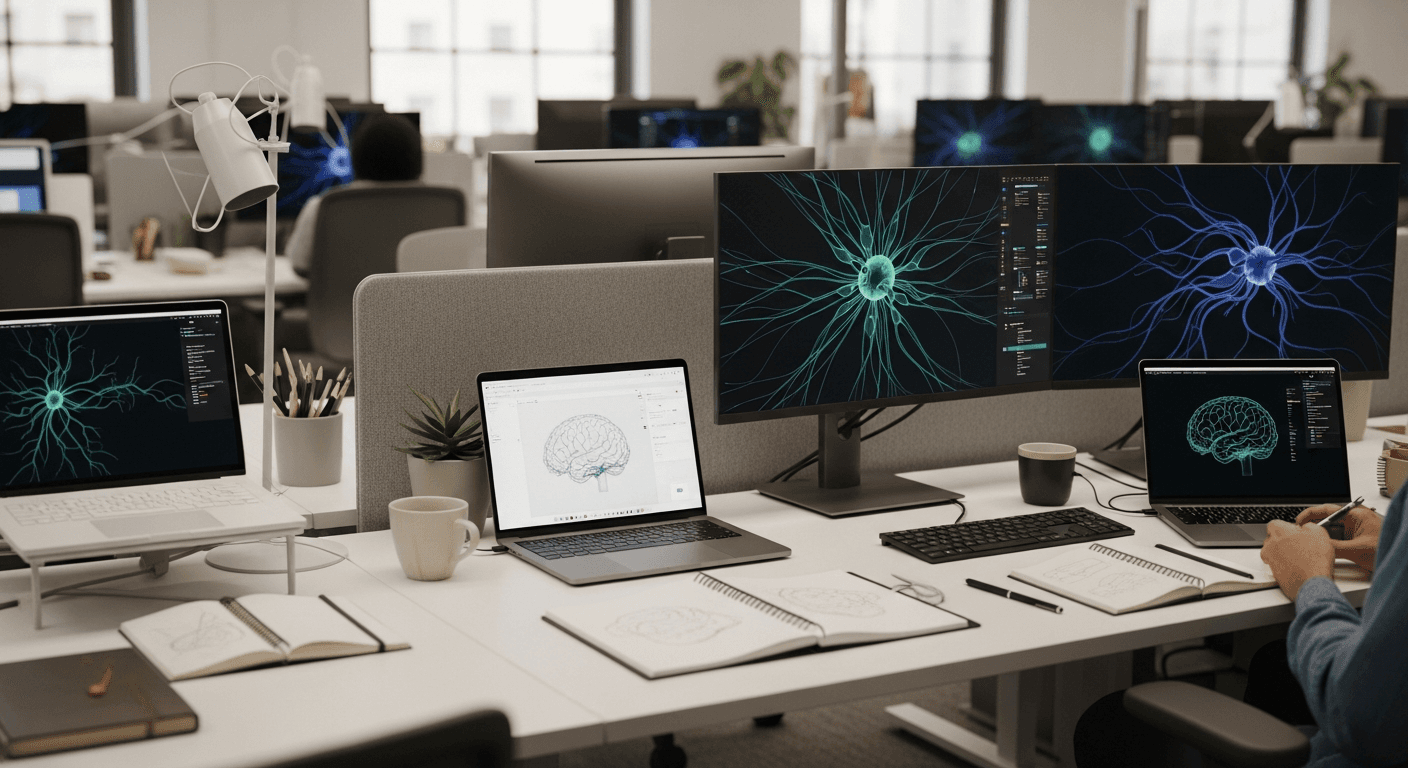
Explore how neuromorphic design principles, inspired by the human brain, can revolutionize digital accessibility and user experience, creating more intuitive and inclusive interfaces for everyone.
The digital world, while vast and connecting, can inadvertently exclude individuals with cognitive differences or disabilities. Traditional UI/UX design often focuses on visual clarity and efficiency for the 'average' user, leaving many struggling to navigate complex interfaces. But what if we could design digital experiences that are inherently more intuitive, adaptable, and inclusive? The answer might lie in neuromorphic design – a revolutionary approach inspired by the very structure and function of the human brain.
What is Neuromorphic Design?
Neuromorphic design, at its core, seeks to mimic the way our brains process information. Instead of relying on rigid, pre-defined rules, it leverages principles of adaptability, pattern recognition, and contextual understanding. Think of how your brain effortlessly filters out background noise to focus on a conversation, or how it instantly recognizes a familiar face even from a blurry photo. Neuromorphic design aims to bring that same level of intelligent processing to digital interfaces.
Key Principles of Neuromorphic Design for Inclusive Experiences:
* Adaptive Complexity: Human brains excel at managing complexity by prioritizing relevant information and filtering out distractions. In digital interfaces, this translates to dynamic content presentation. Imagine a news website that learns your reading habits and automatically surfaces articles you're likely to be interested in, while minimizing irrelevant headlines. Or a mobile app that simplifies its interface based on the user's demonstrated skill level.
* Contextual Awareness: Our brains constantly interpret information based on context. A simple word can have multiple meanings depending on the surrounding sentences. Similarly, a neuromorphic interface can adapt its behavior based on the user's current activity, location, or even emotional state (detected through sensors or usage patterns). For example, a navigation app could switch to a simplified, voice-guided mode when it detects the user is driving.
* Pattern Recognition and Prediction: The brain is a master of pattern recognition, allowing us to anticipate events and make predictions. Neuromorphic design can leverage this by learning user behavior patterns and proactively offering assistance. Think of a code editor that anticipates the next line of code based on your previous entries, or a customer service chatbot that suggests relevant solutions based on your initial inquiry.
* Sensory Integration: Our brains seamlessly integrate information from multiple senses to create a holistic understanding of the world. Digital interfaces can benefit from incorporating multiple modalities like audio, haptics (vibration), and even augmented reality to enhance engagement and accessibility. For instance, a learning app could use tactile feedback to reinforce correct answers or provide audio cues for visually impaired users.
Practical Examples of Neuromorphic Design in Action:
* Adaptive Learning Platforms: These platforms use AI algorithms inspired by neural networks to personalize the learning experience. They track student progress, identify knowledge gaps, and adjust the difficulty level and content accordingly, ensuring that each student learns at their own pace and receives targeted support.
* Smart Home Assistants: Devices like Amazon Echo and Google Home leverage natural language processing to understand and respond to user commands. They learn user preferences over time and can automate tasks based on contextual cues, such as turning on the lights when you enter a room or playing your favorite music when you wake up.
* Accessible Mobile Apps: Developers are increasingly incorporating accessibility features into mobile apps based on neuromorphic principles. This includes features like dynamic font scaling, customizable color schemes, and voice control, making apps more usable for people with visual impairments, cognitive disabilities, or motor impairments.
* AI-Powered Healthcare Tools: Neuromorphic computing is being used to develop AI-powered tools that can assist doctors in diagnosing diseases, monitoring patient health, and personalizing treatment plans. These tools can analyze complex medical data and identify patterns that might be missed by human doctors, leading to more accurate diagnoses and better patient outcomes.
The Benefits of Neuromorphic Design for Accessibility:
* Improved Usability for People with Cognitive Disabilities: Neuromorphic interfaces can simplify complex tasks, provide clear visual cues, and offer personalized support, making digital experiences more accessible to individuals with autism, ADHD, or learning disabilities.
* Enhanced Accessibility for Visually Impaired Users: Multi-sensory interfaces, voice control, and screen readers can provide alternative ways for visually impaired users to interact with digital content.
* Increased Independence for Older Adults: Neuromorphic design can simplify complex tasks, provide clear instructions, and offer personalized assistance, helping older adults stay connected and independent.
* Greater Inclusivity for Diverse Users: By considering the diverse needs and abilities of all users, neuromorphic design can create digital experiences that are more equitable and inclusive.
Actionable Advice for Implementing Neuromorphic Design:
* Embrace User-Centered Design: Start by understanding the needs and challenges of your target audience. Conduct user research, gather feedback, and iterate on your designs based on real-world usage.
* Prioritize Simplicity and Clarity: Avoid overwhelming users with too much information or complex navigation. Focus on creating a clean, intuitive interface that is easy to understand and use.
* Leverage AI and Machine Learning: Use AI and machine learning algorithms to personalize the user experience, adapt to individual needs, and provide proactive assistance.
* Incorporate Multi-Sensory Feedback: Use audio, haptics, and other sensory modalities to enhance engagement and accessibility.
* Test and Iterate: Continuously test your designs with real users and iterate based on their feedback. Use A/B testing to compare different design options and identify what works best.
The Future of Digital Inclusion:
Neuromorphic design represents a paradigm shift in how we approach digital accessibility and user experience. By drawing inspiration from the human brain, we can create interfaces that are inherently more intuitive, adaptable, and inclusive. As AI and machine learning technologies continue to evolve, we can expect to see even more innovative applications of neuromorphic design in the years to come, paving the way for a truly inclusive digital world where everyone can participate and thrive.
By embracing neuromorphic principles, we can move beyond simply accommodating accessibility guidelines and create digital experiences that are truly empowering and transformative for all users. The future of digital inclusion is not just about making technology accessible; it's about making it human.